


Starting fitness training does not have to feel confusing. Most beginners do not need a complicated split, expensive gear, or a punishing routine. What they need is a clear goal, a training format that fits real life, and a plan simple enough to repeat next week.
For most adults, the basic global standard already works very well: regular cardio plus strength training for the major muscle groups.
If you are reading this because you want to know how to start fitness training, do not begin with random exercises from social media. Begin with structure. A good start is not about doing everything at once. It is about doing the right things in the right order.
The process of how to start fitness training becomes much easier when you break it down into a few simple steps.
Step 1: Choose a clear goal
The first step is to decide what you want from training. “I want to get in shape” sounds motivating, but it is too vague to guide real action. A better goal is specific and measurable. For example: lose body fat, build strength, improve stamina, reduce waist size, or simply train three times a week for the next two months. Clear goals make planning easier and make progress easier to track.

Your goal affects almost everything else: exercise selection, training frequency, workload, and the way you measure progress. If your goal is fat loss, body weight, waist measurement, daily activity, and food habits matter. If your goal is strength, you need to track exercises, reps, and load. If your goal is general health, consistency and weekly activity volume matter more than chasing personal records.
A useful rule is to give each training phase one main target. You can still get extra benefits on the side, but your main goal should stay obvious. A person trying to lose fat, build maximum strength, train for a race, and “fix posture” all at once usually ends up with a messy plan and no clear feedback. Simple goals produce better decisions.
Step 2: Match the training format to the goal
Once the goal is clear, choose a format that actually serves it. This is where many beginners lose time. They choose what looks impressive instead of what matches the result they want.

If fat loss is the main target, a practical foundation is moderate cardio together with strength training and a sustainable calorie deficit. Regular activity helps with energy expenditure and health, while resistance training helps preserve or build lean mass during the process.
If your goal is strength or muscle, resistance training should be the center of the plan. Cardio still has value for health and work capacity, but it should not replace your main work.
Many beginners also assume that fitness training and bodybuilding are the same thing, which often leads to unrealistic expectations. In reality, they have different goals and approaches. You can learn more in our article Fitness and Bodybuilding Are Not the Same Thing.
If your goal is general health, the best approach for most people is a combination of aerobic activity and muscle-strengthening exercise, which is exactly what major health guidelines recommend.
If your priority is stress relief, better body awareness, mobility, or simply a calmer and more pleasant training experience, mind-body formats can be a very good choice. Yoga in particular has evidence for stress management, sleep, emotional well-being, and balance. That does not mean it replaces every other format, but it can absolutely be the right starting point for someone whose main goal is to feel better and move better.
The key point is this: the best program is not the one that looks perfect on paper. It is the one you can keep doing.
ACSM’s recent summary of the evidence makes this very clear for healthy adults: the biggest benefits come from consistent resistance training, not from overcomplicated methods, and useful results are possible with body weight, bands, machines, or free weights.
Step 3: Check your health and record your starting point
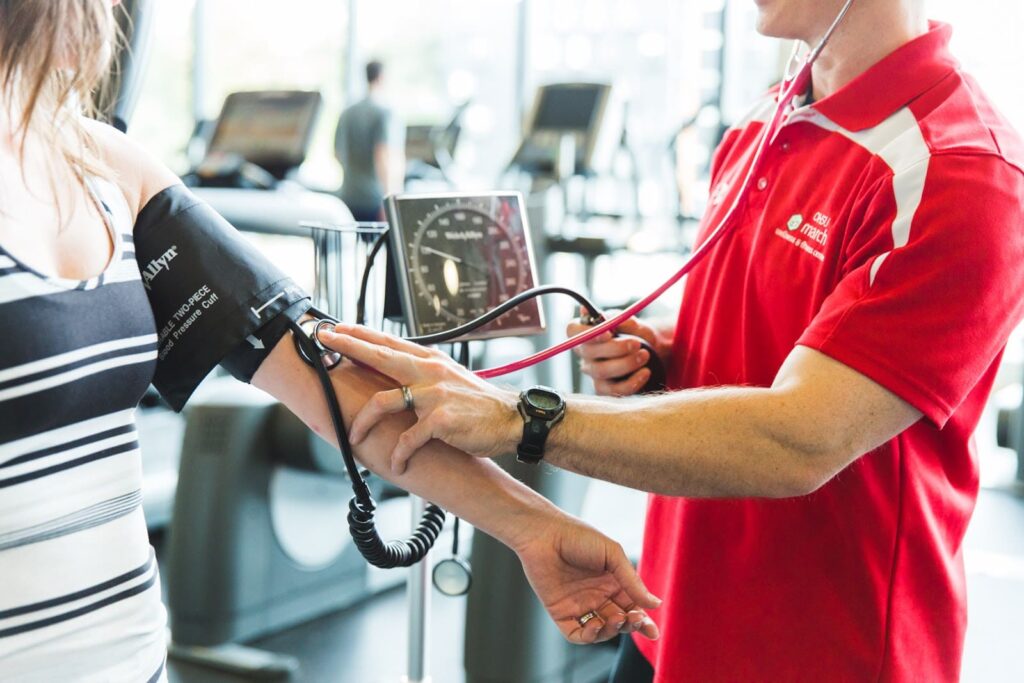
Before you train hard, make sure you understand your starting condition. Most healthy adults can begin moderate exercise safely without turning it into a medical project. But if you have a chronic condition, troubling symptoms, a recent injury, pregnancy, or medication that may affect exercise response, it is wise to speak with a clinician before pushing intensity.
The goal is not to create fear. The goal is to choose a safe starting level.
After that, record your baseline. Without starting data, progress often feels invisible even when it is happening. For fat loss, practical markers include body weight, waist circumference, photos, and average daily steps. For strength, track the exercises, the number of reps, and the load you use. For endurance, track distance, time, pace, or how quickly you recover after effort. Resting heart rate can also be a helpful basic marker over time.
Do not track everything just because you can. Track what matters for your goal. A good beginner system is boring in the best way: a few useful numbers, measured regularly under similar conditions. That gives you a realistic picture of change and helps you avoid emotional decisions based on one workout or one bad day.
Step 4: Build a simple program for your current level
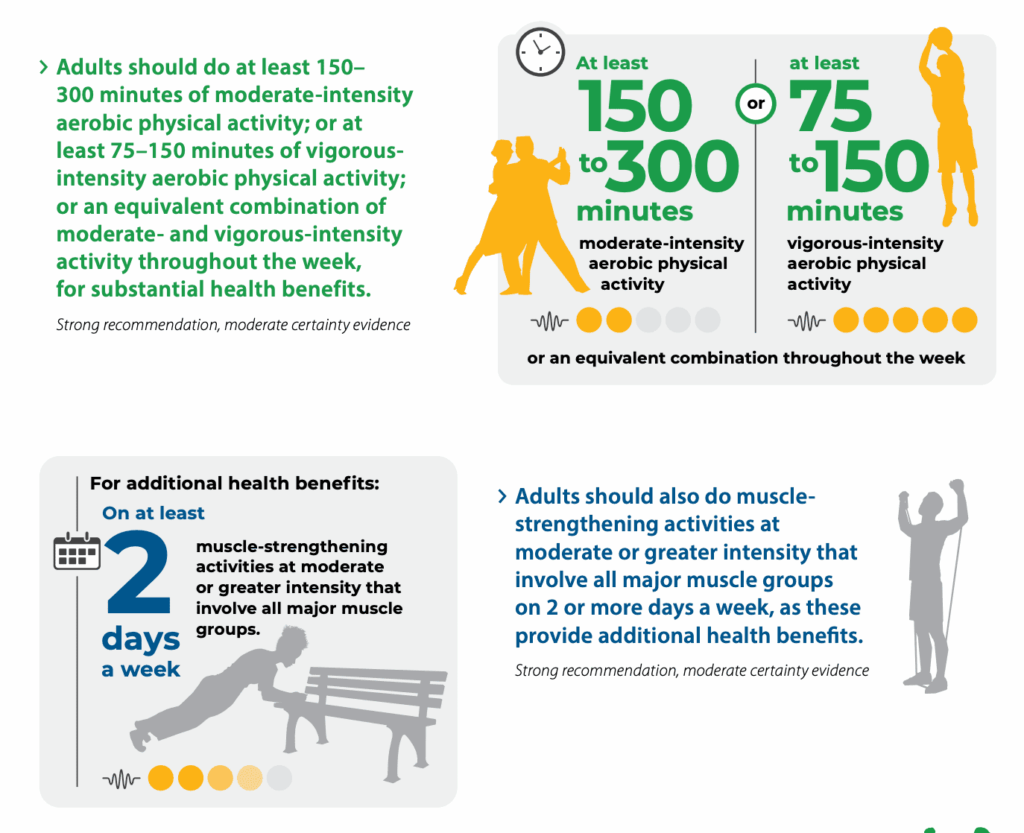
A beginner program should match your current condition, not the level you wish you already had. For most adults, a strong starting framework is 150 to 300 minutes of moderate cardio per week plus two to three strength sessions that cover the main muscle groups.
This can be done at home, outside, or in a gym. Brisk walking, cycling, swimming, and similar moderate activities all count.
A basic strength plan does not need many exercises. One movement for the legs, one hip hinge, one push, one pull, and one or two simple core exercises are enough for a beginner. In practice, that might mean a squat variation, a hinge pattern, a push-up or chest press, a row, and a plank. What matters most at the start is learning clean movement, choosing loads you can control, and training regularly enough to improve.
A very simple week can look like this: three to five cardio sessions of 30 to 45 minutes at moderate effort, plus two full-body strength sessions on nonconsecutive days. If that feels too much, start smaller. Even shorter sessions still count, and activity can be spread across the week. The important thing is to begin with a plan you can actually finish.
If you feel lost, use the universal standard as your default. It is not a “minimal” plan in the weak sense. It is a serious health and fitness baseline that works for a very large number of people who want better energy, better body composition, and better physical functioning without athletic goals.
Step 5: Spend the first months on consistency
For the first several weeks, and often for the first one to three months for true beginners, the smart strategy is moderate training with a strong focus on routine.

Public-health guidance uses a simple phrase for this: start low and go slow. That principle exists because the body adapts in stages. Muscles improve, but so do joints, tendons, coordination, and tolerance to repeated effort.
During this phase, regularity matters more than intensity. Learn the exercises. Keep the schedule realistic. Leave the gym feeling that you could come back and do it again in a day or two. This is how you build a base instead of creating the classic cycle of overmotivation, overload, soreness, and dropout.
Beginner plans from public-health services also tend to build gradually over multiple weeks rather than trying to force everything into the first few sessions.
When your normal sessions start to feel easier, progress gradually. That can mean adding a little time to cardio, walking faster, increasing resistance slightly, adding one more set, or improving technique at the same load. Small changes are enough. The goal is not to prove how hard you can suffer. The goal is to create a training rhythm you can sustain, because the health and fitness benefits of exercise depend on regular ongoing activity.
If you still feel unsure how to start fitness training, here is the easiest place to begin: aim for 150 to 300 minutes of moderate cardio per week and at least two strength sessions for the major muscle groups.
That is more than enough for most people who want to start exercising in a sensible way. Do that consistently, keep your goal clear, and let progress build over time.